
Museums are not all built the same way, and they should not be designed the same way. A science centre has very different needs compared to a heritage site. A children’s museum works differently from a natural history museum. Each type of museum has its own audience, its own purpose, and its own way of telling a story.
The way content is presented, how visitors move through the space, and how they interact with exhibits all need to be carefully aligned with the type of museum. A structured experiential design approach supports this by aligning these elements. Let’s explore the different museum types and how each one should be designed.
Different Types of Museums: What Makes Each One Distinct
Museums exist in many different types, each with its own purpose, audience, and way of presenting information. From art and history museums to science centres and children’s museums, every type requires a unique approach to design. Experiential design plays a key role in shaping how visitors engage with exhibits, move through spaces, and connect with stories.
Let’s explore in detail:
1. Art Museums
Art museums are built around objects, such as paintings, sculptures, installations, and other works that need to be seen. The design challenge here is partly curatorial and partly atmospheric. Visitors need enough space and minimal distractions to focus on what they are looking at, while also having enough context to understand it.
Experiential design in an art museum is not about adding technology unnecessarily. It is about planning how people move through the space and experience the artworks. This includes how artworks are grouped, how lighting affects the look and feel of each room, and how visitors move from one gallery to another.
2. Children’s Museums
Children’s museums work very differently from most other museum types. The main goal is not to display objects, but to create a space where children can explore, play, and learn by doing.
This means the children’s museum design needs to be practical and easy for children to use. The size of the space, the height of exhibits, and the materials used should all be suitable for them. Also, the space should support learning by guiding children through activities in a way that feels natural and engaging, not like a classroom.
Good experiential design also considers the adults who come with children. Parents and teachers should be able to understand what is happening so they can support the child’s experience, without controlling it. The goal is to create a space that works well for both children and adults.
Case Study: Mishkat Science Centre, Saudi Arabia
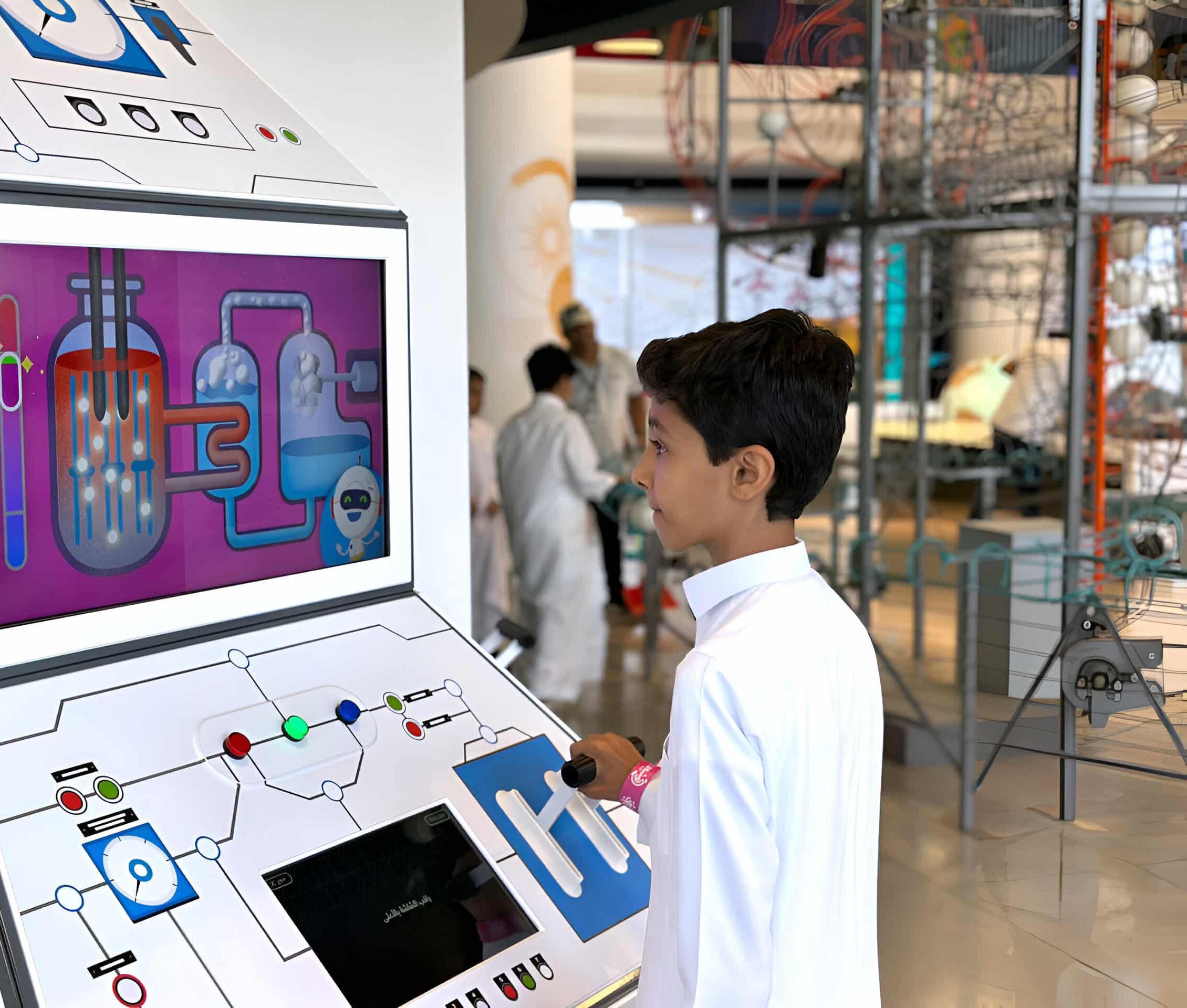
Mishkat Science Centre partnered with formula D to develop an interactive exhibit for young children focused on renewable energy.
We designed the experience as a game-based learning environment using a large projection wall and simple physical props. Children interact with the exhibit by observing visual cues and placing objects in the correct positions. When placed correctly, the system responds by showing how energy from the sun, wind, and the Earth can power a house.
We focused on making the experience easy to understand for children between the ages of four and six. This museum exhibit does not rely on text, and instead uses visuals, colour, and interaction to guide learning. This allows both children and educators to engage with the experience naturally.
3. History and Heritage Museums
History museums carry a particular responsibility. They are often dealing with stories that are complicated, that involve real people, and that matter deeply to certain communities. The design of historical museum spaces has to balance honesty with accessibility.
Types of exhibits in heritage settings tend to fall into a few common categories: artefact display, reconstructed environments, oral history recordings, and timeline-based layouts. These exhibits are more effective when they are connected through a clear story, rather than shown as separate, unrelated elements.
Visitors to heritage sites often come with a personal connection to the subject. The design should respect this by not overwhelming them with too much information at once. A well-planned experiential design strategy supports this by creating spaces where visitors can pause, reflect, and connect with the story in a meaningful way, instead of just moving from one display to another.
4. Science Centres and Natural History Museums
Science centres are built on the idea that learning happens through doing. Natural history museums often work with specimens and environments that most visitors have never encountered in real life.
The design challenge for science centres and natural history museums here is to make complex topics easy to understand. Visitors may not have any prior knowledge, so the space should help them quickly grasp what they are seeing. Whether it is a geological timeline or an exhibit about ecosystems, the information should be clear and easy to follow.
Interactive exhibits work especially well in these spaces. When visitors can touch, try, or explore something on their own, it becomes easier to understand. This could be through simple models, simulations, or sound-based experiences. As a result, the information feels more real and is easier to remember.
5. Military and War Museums
Military and war museums deal with subjects that are serious and often difficult. They cover conflict, loss, courage, and the impact of war, sometimes connected to events that visitors or their families have experienced. Because of this, the museum design needs to handle these topics with care and respect.
These museums attract different kinds of visitors. Veterans and their families may have a personal connection. Students visit to learn. Others come out of general interest. The space should allow each group to connect with the content in a way that makes sense to them.
The focus should be on helping visitors understand the human side of conflict. This can be done by showing real stories, personal experiences, and the long-term impact of war. Elements like sound, recreated environments, and recorded testimonies can make this more meaningful.
6. Music Museums
Music is a time-based, sensory art form, which makes it one of the more interesting challenges for a museum setting. You cannot display a song the way you can display a painting.
Music museums need to be designed in a way that reflects how music is experienced. Since music is something people listen to over time, the space should support active listening rather than only providing written information. Sound can be used throughout the space as part of the overall design, not just in specific audio sections. It is also important to represent the broader context of music, including the people, cultures, and environments connected to it, not just the instruments or well-known artists.
7. Air and Space Museums
Air and space museums display aircraft, spacecraft, and technologies related to flight and space exploration. They also explain how these systems work and the history behind them.
Large objects like aircraft can create a strong visual impact, but they need the right design to help visitors understand them. For example, seeing a real aircraft hanging from the ceiling can be impressive. However, without clear information, visitors may not understand its purpose, history, or how it was built.
A good experiential design approach is to connect these objects with their stories. This can include simulations, cockpit replicas, mission control setups, and projection-based experiences. These elements help visitors understand the subject in a more direct way, rather than just observing it.
Note: At formula D, we offer experiential design services for all types of museums, with solutions tailored to the specific needs, audience, and content of each space. If you are planning a new museum or upgrading an existing one, we’d be happy to discuss your requirements.
Experiential Design Elements Across Different Museum Types
| Experiential Design Element | Where It Works Best (Museum Types) | Purpose |
| Immersive storytelling | History, heritage, and military museums | Helps visitors connect with real events and human experiences |
| Interactive exhibits | Science centres, children’s museums, technology museums | Makes learning more engaging through hands-on interaction |
| Audio-based experiences | Music museums, heritage museums | Adds context and creates a stronger emotional connection |
| Reconstructed environments | History, military, and natural history museums | Helps visitors understand real-life settings and situations |
| Simulation-based experiences | Air and space museums, science centres | Allows visitors to experience complex systems or scenarios |
| Digital and projection-based exhibits | Technology museums, natural history museums | Makes large or abstract concepts easier to understand |
| Wayfinding and spatial flow | All museum types | Improves navigation and overall visitor experience |
Related Articles:
7 Things Visitors Expect from Museums
What Problems Do Visually-Impaired Visitors Experience in Museums?
How Experiential Design Agencies Create Multilingual Experiences?