
Museums are designed to communicate stories through objects, environments, and carefully curated narratives. But much of this communication still depends heavily on visual interpretation. For visitors with visual impairments, this creates a very different starting point, one where access to information, navigation, and engagement is not always intuitive.
In many cases, the barriers are not immediately visible. They show up in small but critical ways: labels that can’t be read independently, layouts that are difficult to navigate without assistance, or exhibits that rely on sight without offering meaningful alternatives. These challenges affect not just accessibility, but a visitor’s ability to fully navigate, understand, and connect with what’s on display.
Let’s explore the real-world challenges visually-impaired visitors face across museum environments, and how experiential designers can address them.
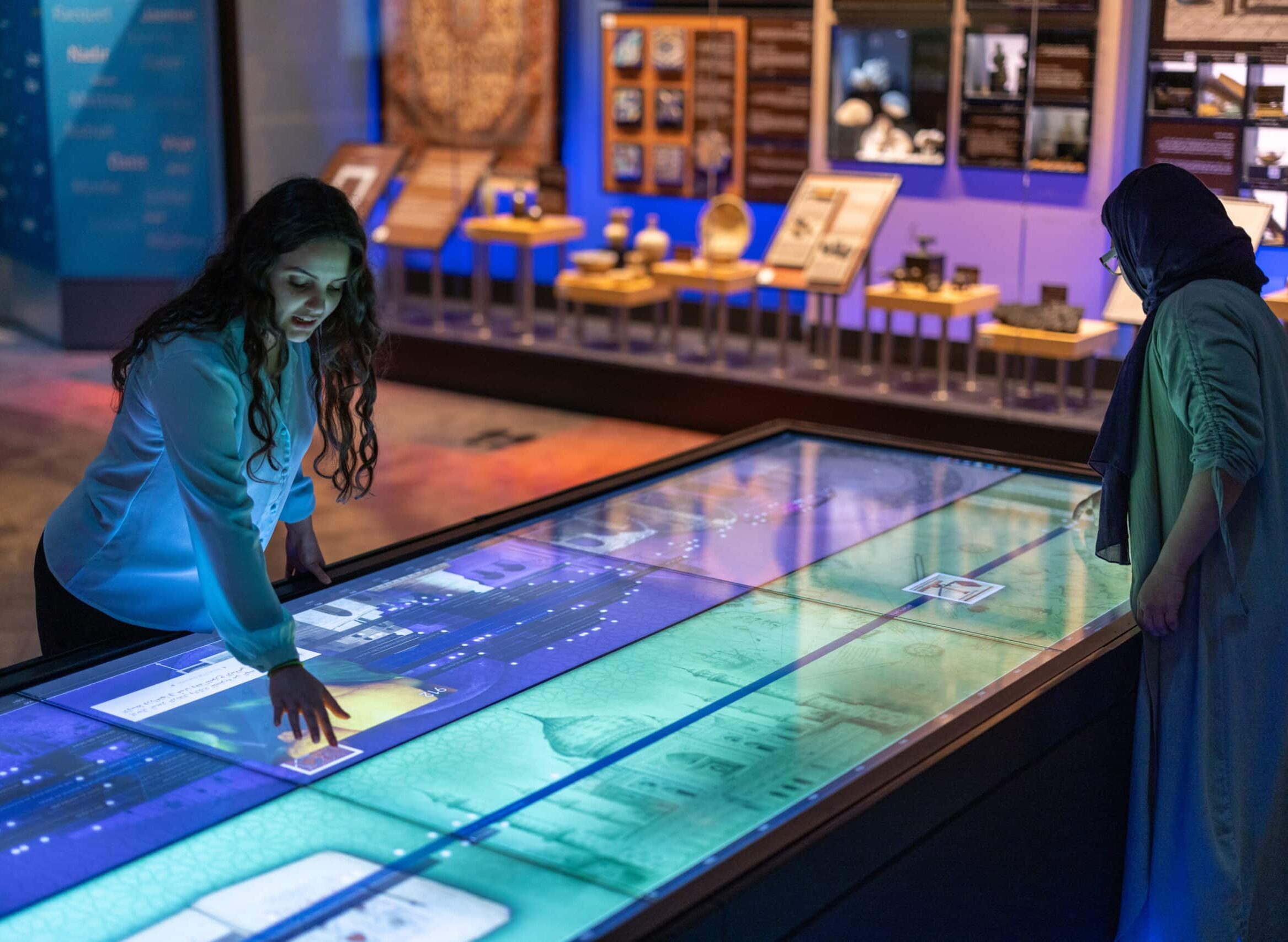
What Challenges Do Visually-Impaired Museum Visitors Face
The challenges faced by visually-impaired visitors in museums extend across the entire experience, from navigating spaces and accessing exhibit information to engaging with content through touch and sound. Factors such as spatial design, level changes, staff support, and audio interpretation can all affect how independently and effectively low vision visitors explore and understand museum exhibits.
1. Wayfinding and Navigation Challenges
Before engaging with museum exhibits, visitors need to move through the space with confidence. This is where wayfinding becomes critical.
In many museums, wayfinding relies heavily on visual cues such as signage, maps, and directional indicators. With an estimated 7 million people living with visual impairments in the US, this dependence on sight means a significant portion of visitors may find it difficult to understand routes, locate galleries, or move independently through the space when non-visual alternatives are not provided.
Beyond signage, the spatial layout itself also influences navigation. Open or undefined gallery environments can make orientation more challenging, as visitors with low vision often rely on physical cues such as edges, walls, or consistent pathways to understand their surroundings and move with confidence.
2. Limited Access to Exhibit Information
Exhibit interpretation in museums relies heavily on labels to communicate context, history, and meaning. However, these labels are not always designed with accessibility in mind. Small text, low contrast, and placement that requires close visual focus can make reading difficult.
Alternative formats, such as Braille or large print, are often missing or not placed where visitors can easily access them. As a result, important context is either delayed or completely lost, making it harder for visitors to fully understand and engage with the exhibit.
3. Lack of Touch-Based Interaction
Touch is one of the most effective ways to understand an object. For visually-impaired visitors, it provides insight into form, texture, and scale, details that are otherwise difficult to access. However, most museums limit physical interaction with exhibits to protect original artefacts.
Tactile alternatives, such as replicas or guided touchpoints, are not consistently integrated into museum exhibits. Without these options, visitors are left relying solely on descriptions, which can limit how deeply they explore and connect with the content.
But the solution goes beyond touch alone. The most effective approach is one that engages multiple senses simultaneously, combining sound, movement, physical interaction, and spatial storytelling to create an experience that is genuinely accessible to all visitors, regardless of visual ability.
Note: This is the philosophy behind the work of formula D. As one of the best experiential design agencies, we create multi-sensory museum environments where visitors don’t just observe, they become part of the story. Rather than treating accessibility as an afterthought, we build it into the design from the ground up.
We created an 18-metre-long, ultra-high-definition interactive projection environment for the Immersive Gulf Stream Experience at the Patricia and Philip Frost Museum of Science in Miami. Visitors walk through a virtual ocean environment populated by thousands of dynamically simulated marine creatures, with camera tracking sensors that respond to physical movement in real time.
Beyond museums, we deliver experience design services for heritage sites, parks, visitor attractions, and urban spaces.

4. Changes in Level and Spatial Transitions
In addition to horizontal movement, museum spaces often include vertical transitions such as stairs, ramps, or split-level galleries. These changes in level introduce a different set of challenges for visitors with visual impairments.
Stairs can be difficult to identify when edges are not clearly marked or when lighting conditions reduce visibility. Similarly, transitions between levels may lack clear tactile or physical cues to signal a change in elevation.
Without these indicators, moving between spaces can become uncertain, affecting both safety and confidence throughout the visit.
5. Staff Awareness and Support
Staff interactions often serve as a key source of guidance and support for visually-impaired visitors.
In many cases, staff may not be fully familiar with how to assist visitors with visual impairments. As a result, they may not always communicate directions in a clear, non-visual way or proactively guide visitors toward relevant accessibility features available within the museum.
This can make it harder for visitors to navigate the space confidently.
6. Limitations in Audio-Based Interpretation
Audio plays an important role in making museum experiences more accessible for visually-impaired visitors. It can help describe exhibits, provide context, and guide visitors through the space in a more inclusive way.
However, audio interpretation is not always designed with these needs in mind. In many cases, audio content focuses on general information rather than offering detailed descriptions that help low vision visitors understand what an object looks like or how it is presented.
There can also be challenges in how audio is accessed or navigated, which may affect how easily visitors can use it independently.
When audio experiences are not thoughtfully developed, they may provide only partial support, rather than enabling a more complete and engaging understanding of the exhibit.
Related Articles –
How Experiential Design Agencies Create Multilingual Experiences?
Mistakes to Avoid in Children’s Museum Exhibit Design
How Interactive Exhibition Design in Museums Engages Gen Z?
How can thorough research help address accessibility challenges in museums?
- Understanding real visitor needs: Engaging with visually-impaired visitors through interviews, observation, and co-design sessions gives museum designers a direct understanding of where the experience breaks down, moving accessibility decisions from assumption to evidence.
- Identifying the right priorities: Not every museum has the same visitor profile or budget. Research helps identify which interventions will have the greatest impact for that specific audience, in that specific space, rather than applying a generic checklist that may not address real needs.
- Informing spatial and sensory decisions: Research reveals how different visitors navigate a space, which sensory channels they rely on, and where the current design creates friction. This directly informs decisions around wayfinding, exhibit interpretation, and multi-sensory layering.
- Reducing costly late-stage changes: When accessibility is informed by research from the start, experience designers avoid the expensive process of retrofitting solutions after a space has already been built.
formula D starts every project with thorough research, embedded within our experience master planning process. Before a single concept is developed, we study the audience, analyse visitor needs, and map the gaps.
Want to make your museum more inclusive and impactful? Reach out to our team!